 ZatooriAsk about a consultation →
A BEGINNER’S GUIDE
Handwriting analysis: what a personal reading looks at
Handwriting analysis, sometimes called graphology, describes visible features in writing and considers how they work together. This guide explains common features, ways to prepare a sample and what to expect from a personal consultation.
What is handwriting analysis?
A handwriting analyst studies a writing sample for visual patterns such as letter shapes, spacing, slant and rhythm. In a personal reading, these details can be discussed as prompts for reflection. Interpretation is subjective, so it is important to ask questions and consider any observation in the context of the whole sample.
Graphology is not an established psychological assessment. A handwriting reading cannot diagnose a health condition or reliably determine a person’s character. Treat it as a perspective for discussion, rather than a scientific test or a fixed label.
Handwriting features you can describe
The material supplied with this site includes quick-reference manuals, an image-analysis proposal, and research on signature verification. They use overlapping terms for what is visible on the page. These diagrams were drawn for this guide and do not reproduce personal handwriting samples.
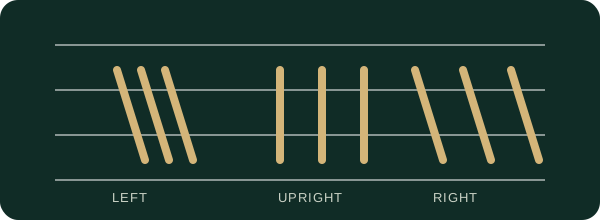
1. Slant
Slant is the direction letter stems appear to lean. Describe whether the sample is mostly upright, left-leaning, right-leaning or mixed, then compare multiple words. Posture, pace and page position can affect the angle.
2. Baseline
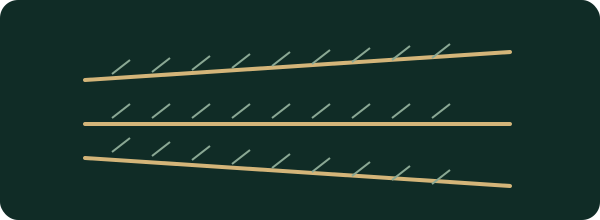
The baseline is the line you can imagine beneath the middle-height letters. Compare several lines and note whether they rise, fall, stay level or vary across the page.
3. Margins and page layout
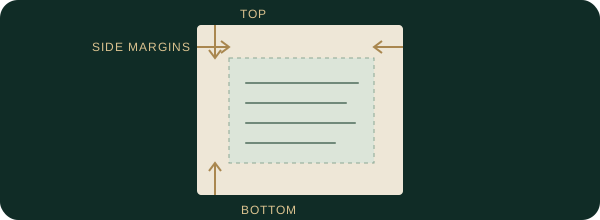
Look at the open space around the writing and how text is arranged inside it. Page size, writing prompt and available room can change the layout, so record those conditions too.
4. Zones
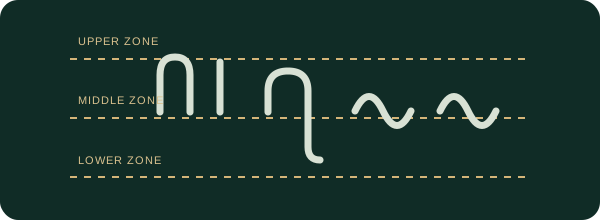
Letters can be compared by their middle-height forms, upper extensions and lower descenders. Notice the relative proportions across repeated examples rather than relying on a single character.
5. Size and proportion
Describe letter height beside width and compare similar letters. The supplied feature-analysis paper lists size and proportions among the features its proposed image-processing workflow would examine.

6. Spacing
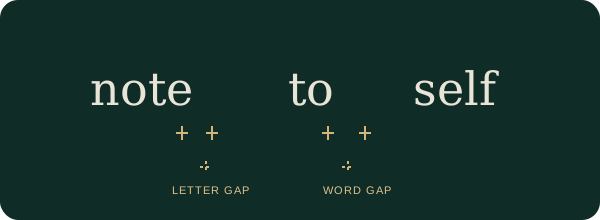
Spacing covers gaps between letters, words and lines. Compare those gaps across the page; line length, margins and paper dimensions can all influence them.
7. Pressure and rhythm
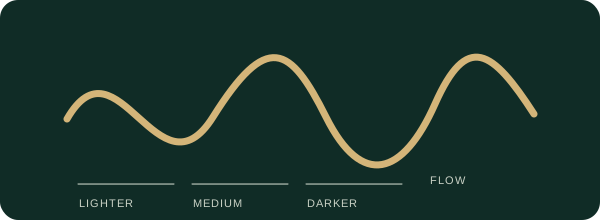
On original paper, stroke darkness and width may vary with pen pressure. Rhythm describes how strokes continue and change direction. Pen type, surface, scan quality and writing speed can alter what appears in a copy.
8. Letter forms and repeated gestures
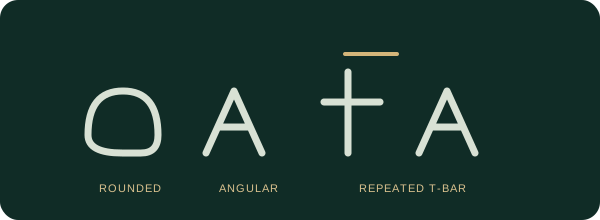
Describe rounded or angular forms, connected or separate letters, distinctive t-bars, dots, and repeated starts or finishes. These are visual features; claims that they reveal a fixed personality trait should be treated cautiously.
9. Signatures
Signature-verification studies compare genuine and forged samples using visual features such as shape, spacing, slant and stroke patterns. That is a question about matching a signature to its writer, not evidence that handwriting predicts personality.

What the supplied research covers
The 2015 paper Handwriting Analysis for Detection of Personality Traits using Machine Learning Approach describes image-processing features such as slant, baseline, t-bars and margins, then proposes classification based on examples labelled by graphologists. It is a proposed method, not a general validation of personality prediction.
The Graphology Applied to Signature Verification studies whether signatures are genuine or forged. It reports experiments on a signature database. Identity verification and personality assessment answer different questions and should not be conflated.
The supplied manuals include traditional trait interpretations. This guide uses their feature vocabulary but does not repeat those interpretations as established facts. Graphology is not a validated psychological or medical assessment.
Sources and further reading
- Joshi, P. et al. (2015). Handwriting Analysis for Detection of Personality Traits using Machine Learning Approach. International Journal of Computer Applications, 130(15), 40–45. Publisher record.
- Oliveira, L. S. et al. (2005). The Graphology Applied to Signature Verification. International Graphonomics Society conference proceedings, pp. 286–290. Read the paper.
How to prepare a handwriting sample
- Ask the analyst what kind of sample is useful before sending anything.
- Write naturally, using the hand and style you normally use.
- Use clear, even lighting if you are sharing a photo, and make sure the writing is legible.
- Remove names, addresses, signatures, phone numbers and other private details unless they are specifically needed.
- Agree with the analyst on a secure way to share the sample and how it will be handled.
What happens in a personal consultation?
A consultation is an opportunity to discuss your questions, the writing sample and the analyst’s observations. Before booking, ask about the format, expected duration, fee, sample requirements and privacy practices. The analyst should be clear about the interpretive nature and limits of graphology.
You do not have to accept every interpretation. The purpose of a reflective reading is to consider what feels relevant to you, not to replace your own judgment or professional advice.
Frequently asked questions
Can handwriting analysis tell me exactly what kind of person I am?
No. A reading is an interpretation of writing features, not a definitive personality test. It should be treated as a conversation starter for self-reflection.
Can handwriting analysis diagnose mental or physical health?
No. Handwriting analysis is not a medical or psychological diagnostic method. Speak with an appropriately qualified health professional about health concerns.
Do I need to send a sample before contacting an analyst?
No. You can first ask what the consultation involves and what sample, if any, would be useful. Do not include sensitive information unless it is necessary and you have agreed how it will be handled.
How much does a consultation cost?
Fees and consultation formats vary. Contact the analyst directly to confirm current pricing and availability before booking.
A PERSONAL CONVERSATION
Curious about a reading?
Ask a question and learn whether a one-to-one handwriting analysis consultation is right for you.
Contact the analyst →